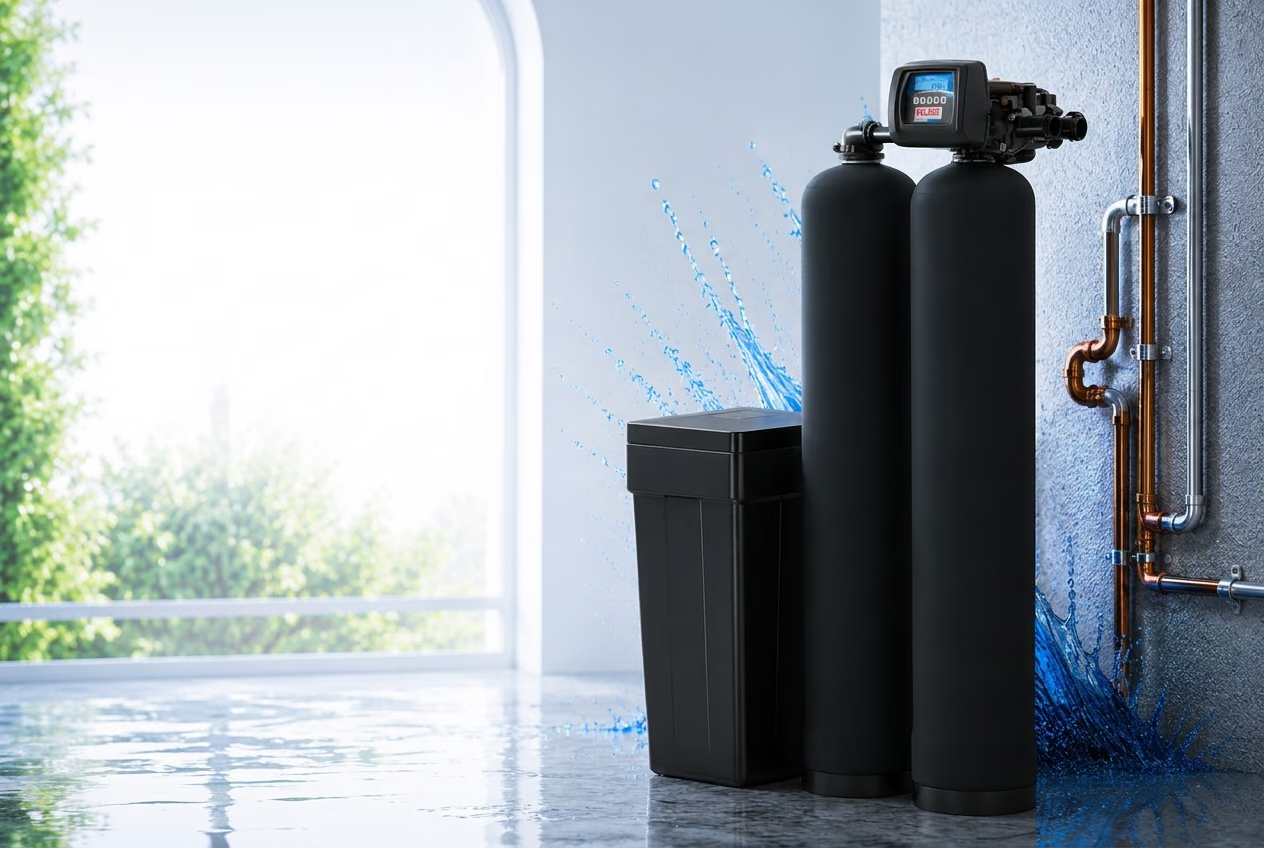
Nearly every home around DeWitt and the Quad Cities is on hard water, and most of it is very hard. The river towns drink Mississippi water that Iowa American Water filters and disinfects but does not soften, at a typical 13.7 grains per gallon. Clinton's deep Jordan wells run about 15 grains. DeWitt's city wells run about 13, Fulton about 18, and the private wells drilled into Silurian dolomite on the acreages between them often test higher than any of those. The crust on the faucets, the spotted glasses and the rumbling water heater are the result. A softener is the fix, and we install it in two configurations.
How a metered softener works
Both of our softener systems are ion-exchange units built around a metered control valve. Hard water passes through a tank of resin beads that hold sodium; the beads trade that sodium for the calcium and magnesium in the water, and soft water comes out the other side. When the resin has traded away its sodium, the valve regenerates: it draws brine from the salt tank through the resin, which strips the hardness off the beads and recharges them, then rinses the waste to the drain.
The word that matters is metered. The valve counts the gallons the house actually runs and regenerates when the resin is spent, not on a fixed night whether anyone was home or not. That is where the salt and water savings come from, and it is why we do not install timer valves. How hardness is measured, what the grain numbers mean for each town and how we size the resin bed are covered in detail on the water softener page.
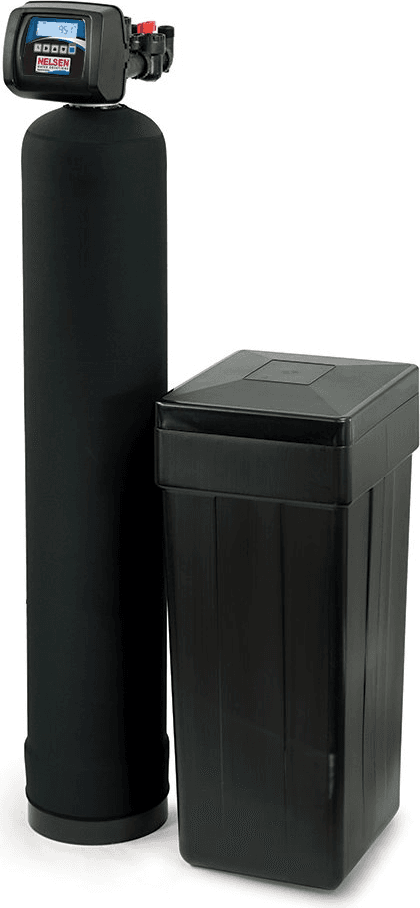
Single tank: the right fit for most homes
The single-tank system is a 48,000-grain metered softener with a separate brine tank. Sized to the household, it handles a family's daily use and regenerates once the meter says the resin is spent, typically overnight. During that regeneration the house runs on bypass hard water for roughly an hour, which for most families happens while everyone is asleep. It is the configuration we install most often: compact enough for a utility room or a basement corner, straightforward to service, and the one that a typical three- or four-bathroom house in Eldridge or Bettendorf actually needs.
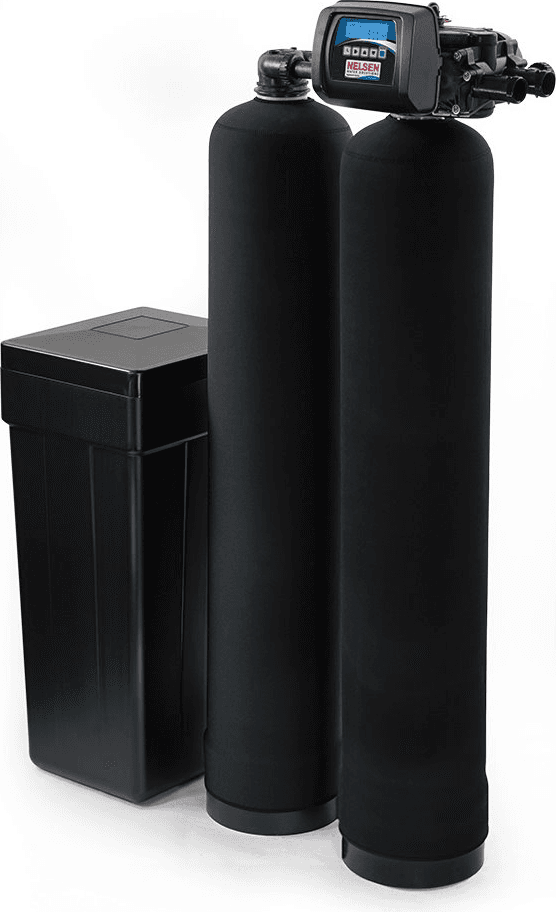
Twin tank: soft water that never pauses
The twin softener uses two resin tanks on one valve. While one tank is in service the other is regenerated and held in reserve, so the moment the first is spent the valve switches over and soft water keeps flowing. There is no bypass hour, and there is no running out on a heavy day. That matters for larger homes with many bathrooms, for households that run laundry and showers at all hours, and for acreages where a barn or shop draws water around the clock. The twin also tends to regenerate with the resin fully exhausted rather than on a safety margin, which keeps salt use efficient.
Buying, installing and keeping it running
A new softener starts with the free water test, which gives us your hardness in grains per gallon, your iron and your TDS. With the number of people in the house and your peak flow we size the resin volume and pick single or twin. Installation ties into the main line after any iron or sediment filter, with a bypass so the house is never without water during service, a drain for the brine rinse and the valve programmed to your tested hardness. We go over the salt level, the bypass and the regeneration time before we leave. The purchase and install process, including what national cost guides say an installed softener runs, is on the softener installation page.
Worth knowing
After the install, the softener needs salt and very little else. Salt delivery is available, and repairs and service cover any brand of softener, not just the ones we sell. Problems with installed equipment reach a 24/7 phone line, and we are on site within 2 hours. To find out which configuration your water and your house call for, request a free estimate or call (563) 221-9009.