Most whole-house water problems in Clinton, Jackson and Scott counties come down to one of three things in the water: a disinfectant the utility added, iron the well delivered, or sulfur and the bacteria that feed on it. Each one has a filter built for it, and each filter is a single tank at the main line with an automatic backwashing valve on top. Midwest Water Solutions installs all three and services every brand of them. Which one goes in your utility room is decided by a free water test at your tap, not by what is on the truck.
Carbon filter: chlorine, taste and odor on city water
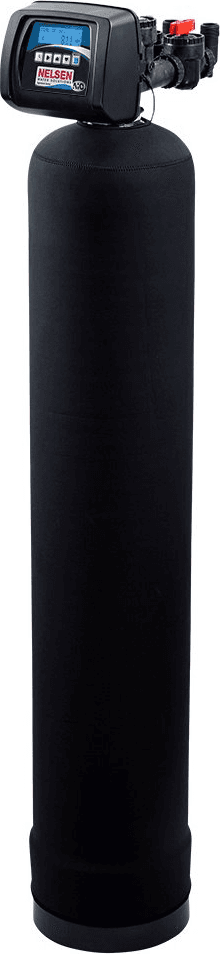
The carbon filter is the system for town water. Davenport, Bettendorf and the rest of the Iowa American Quad Cities system run Mississippi River water disinfected with chloramine; Clinton, Fulton, Maquoketa, DeWitt and Eldridge chlorinate their wells. Either way, the residual that keeps the water safe in the pipes is what you smell in the shower and taste in the coffee. A whole-house carbon tank takes it out at the point of entry, so every tap, the shower, the ice maker and the laundry all get the same clean water.
The media matters here. Standard granular activated carbon handles free chlorine. Chloramine, which the river towns use, is more stubborn and calls for catalytic carbon. That is one reason the test comes first: it tells us which disinfectant you have and how much, which sets the media and the realistic life of the bed. The tank backwashes itself to keep the carbon from packing, and the media is replaced on a schedule rather than swapped like a cartridge. The full discussion of chlorine versus chloramine, and what carbon does and does not remove, is on our carbon filter page.
Iron filter: orange stains from a dolomite well
Private wells around DeWitt, Welton, Low Moor and Grand Mound draw from fractured Silurian dolomite with very little dissolved oxygen, so iron stays dissolved and invisible until the water meets air. Then it turns to rust on porcelain, in the laundry and in the bottom of a glass left on the counter. Grand Mound's municipal wells in the same rock run about 1.7 mg/L of iron by Iowa DNR sampling, nearly six times the 0.3 mg/L staining threshold, and plenty of acreage wells test higher.
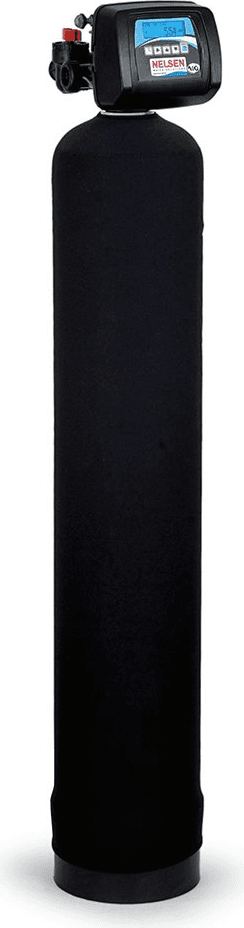
An iron filter oxidizes the dissolved iron and traps the resulting particles in a media bed, then backwashes them to the drain. It also reduces the sediment that comes along with it. The result is clear water that stays clear, a toilet that stays white and a softener downstream that is no longer being fouled by iron. Red-water iron, where the tap already runs tinted, changes what goes ahead of the filter, and it is one of the things the test looks for. More on iron, manganese and the staining chemistry is on the iron filter page.
Ozone filter: sulfur, high iron and iron bacteria
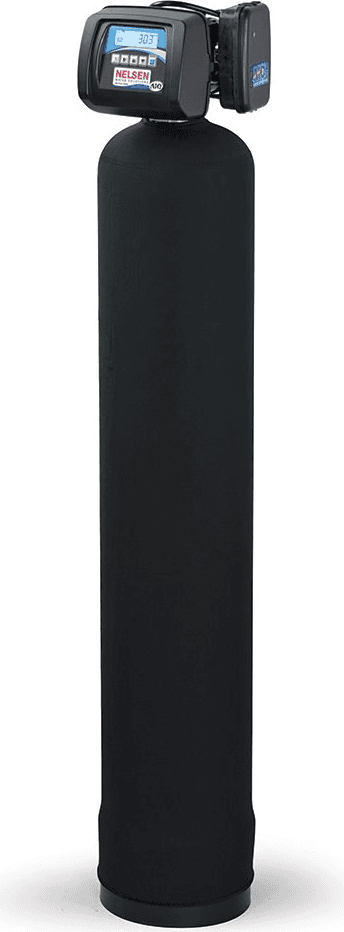
Some wells need more than an iron filter. When the water smells like rotten eggs on every tap, hot and cold, and the toilet tank grows rusty or black slime that comes back a week after scrubbing, the well is carrying hydrogen sulfide and iron bacteria along with the iron. Ozone is the strongest oxidizer we install. An ozone generator feeds the tank, the ozone converts dissolved sulfur, iron and manganese into particles the media can catch, and the backwash carries them away. The same system also deals with the bacteria that make the slime, which a plain iron filter cannot do.
Before anyone orders an ozone system, two questions get asked. Is the smell on every tap, or only the hot water? If only the hot water smells, the problem is the water heater anode, not the well, and no filter fixes that. Is there staining or slime with the smell? That pairing is what points to ozone over the simpler iron filter. The ozone filter page walks through both questions and how the system is set up.
How we size and install a filtration system
Every filtration install starts with the free water test: chlorine or chloramine, iron, manganese, hardness, TDS and, on a well, a look at the pressure tank and the plumbing. The numbers set the media and the tank size; the peak flow of the house sets the valve. The tank goes in at the main line after the pressure tank with a bypass, a drain for the backwash and power for the valve, ahead of any softener so the softener resin is protected. We program the backwash to your water use, show you where the bypass is, and leave the install date and your readings on the tank.
Worth knowing
We handle the testing, the install and the service calls, and the service side covers any brand of filter, not only the ones we sell. If something goes wrong with installed equipment, the phone line is answered 24/7 and we are on site within 2 hours. To find out which of the three tanks your water actually calls for, request a free estimate or call (563) 221-9009.