Reverse osmosis is the system for the part of the water you cannot taste. A carbon filter handles chlorine and an iron filter handles staining, but what dissolves in eastern Iowa water, nitrate, radium, sodium, lead and the general load of dissolved solids, passes straight through both. A reverse osmosis membrane rejects it. Midwest Water Solutions installs two sizes: a residential unit at the kitchen sink and a whole-home system in the basement for homes that want purified water at every fixture.
What the membrane does
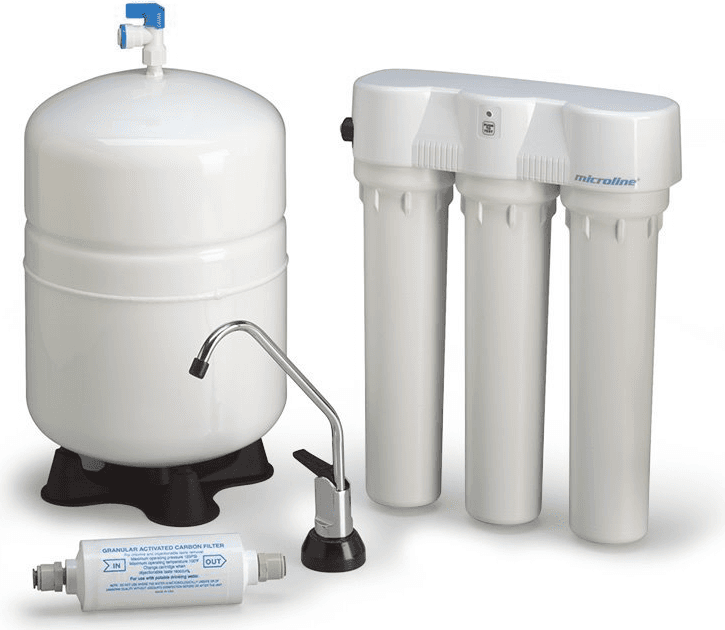
Water is pushed under line pressure through a thin-film composite membrane rolled inside a housing. Water molecules pass; dissolved solids largely do not, and the rejected concentrate goes to the drain. Depending on the contaminant and the water temperature, that is a 90 to 99 percent reduction in total dissolved solids, which is why the water tastes clean and the ice comes out clear. Ahead of the membrane sit a sediment prefilter and a carbon prefilter that protect it from grit and chlorine; after it, a storage tank holds the purified water so the dedicated faucet pours at a useful rate.
The local reasons for owning one are specific. Shallow wells in row-crop country run into nitrate, and Iowa's private-well records show more than 6,600 wells averaging at or above the 10 mg/L limit over a fifteen-year span. DeWitt's deep Jordan wells read combined radium at two of three wells, Clinton's district has picked up short-chain PFAS, and Rock Island's most recent lead round put four homes over the action level. Every one of those is dissolved, and every one is a reason the kitchen tap deserves its own treatment. The full list, with the numbers by town, is on the reverse osmosis page.
Residential reverse osmosis: 50 gallons per day
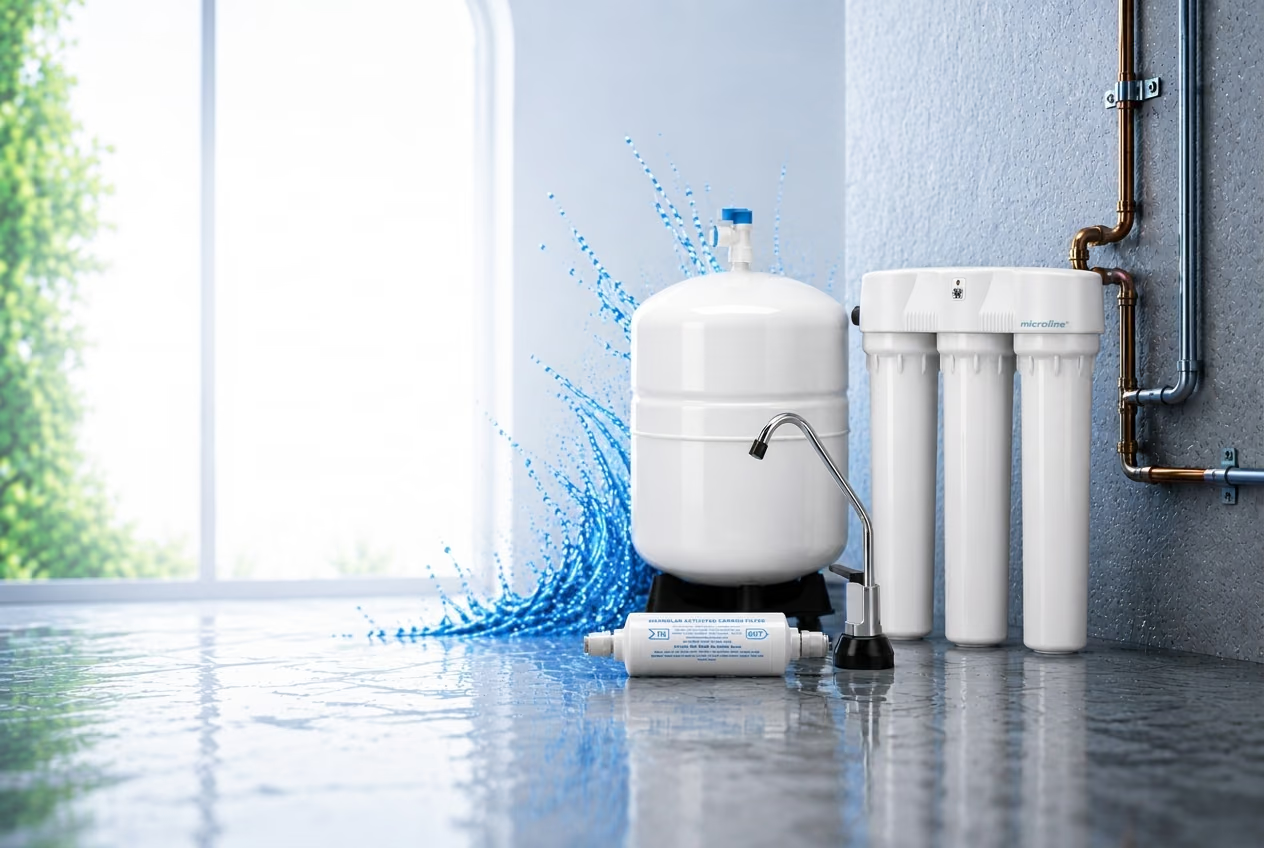
The residential system is the under-sink unit most homes want. It is rated at 50 gallons per day of purified water, far more than a household drinks and cooks with, and its storage tank means the faucet pours immediately rather than at the membrane's slow production rate. It fits in the cabinet under the kitchen sink, feeds a dedicated faucet on the counter, and runs a line to the refrigerator for ice and chilled water if you want it. It removes up to 99 percent of contaminants, improves taste, odor and clarity, reduces chlorine, lead and dissolved solids, and asks for little beyond scheduled filter changes.
350 gallons per day: purified water at every fixture
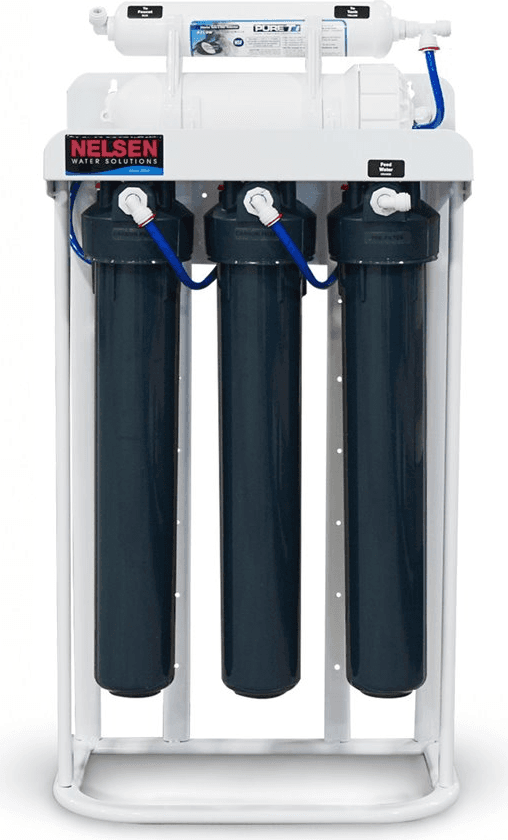
The 350 gallon per day system does everything the residential unit does with seven times the output. Installed in the basement or utility room at the point of entry, it is the whole-home system for homes where purified water goes to every fixture: a kitchen plus a wet bar, a finished-basement kitchenette, a heavy-use ice maker, or an outdoor spigot for a spot-free car wash. It also suits a small office or shop that serves drinking water. The same prefilter and membrane stages apply, scaled up, with a larger tank and the plumbing run to each fixture.
Installation and upkeep
Installation of the residential unit is a plumbing visit under the sink: we tap the cold line, mount the unit, drill and set the faucet, connect the drain through an air gap, run the fridge line if there is one, then flush the first tankfuls and check TDS at the faucet before we leave. The whole-home system goes in the basement at the point of entry, tied into the main line with its own storage, and gets the same flush and TDS check at the taps. On a well with iron or sediment, a point-of-entry filter ahead of the RO keeps the prefilters from clogging early, and the free water test tells us whether that is needed.
Worth knowing
After that, the system lives on filter changes. Prefilters go six to twelve months, the membrane two to five years when the prefilters are kept up, and we note the dates on the unit and set the schedule from your water. Filter changes and repairs cover any brand of RO, not only the ones we sell, and the details are on the RO service page. To get a size recommendation and a written estimate, request a free estimate or call (563) 221-9009.