Two problems on a private well go beyond what a filter and a softener can do. The first is bacteria: a lab sample that comes back positive for coliform or E. coli, which means the water needs disinfecting every time it runs. The second is a well so heavy in hydrogen sulfide or iron that an iron or ozone filter cannot oxidize it all. Midwest Water Solutions installs a system for each: an ultraviolet disinfection unit for the first, and a chemical feed pump for the second. Both sit at the end of a treatment stack that has already handled iron, sediment and hardness.
Ultraviolet disinfection: bacteria, with nothing added
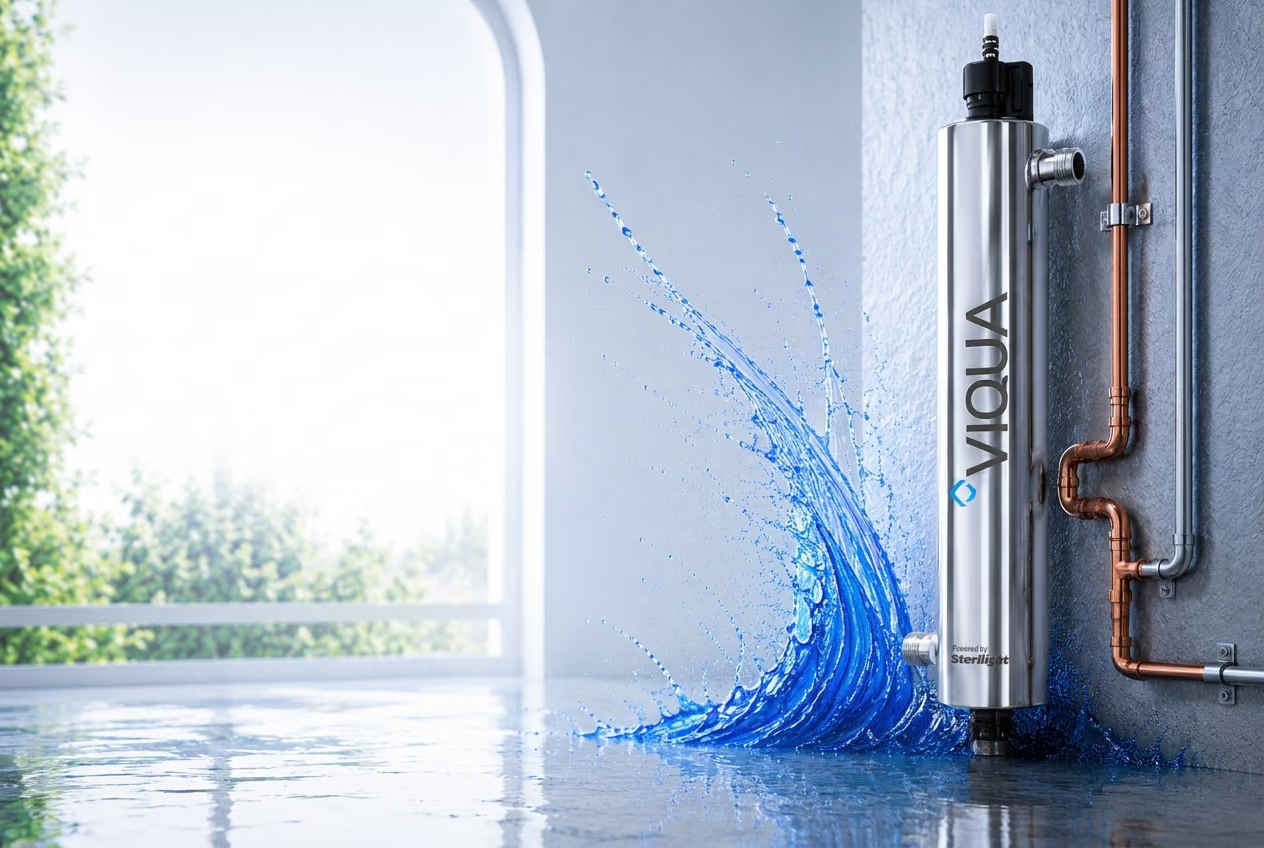
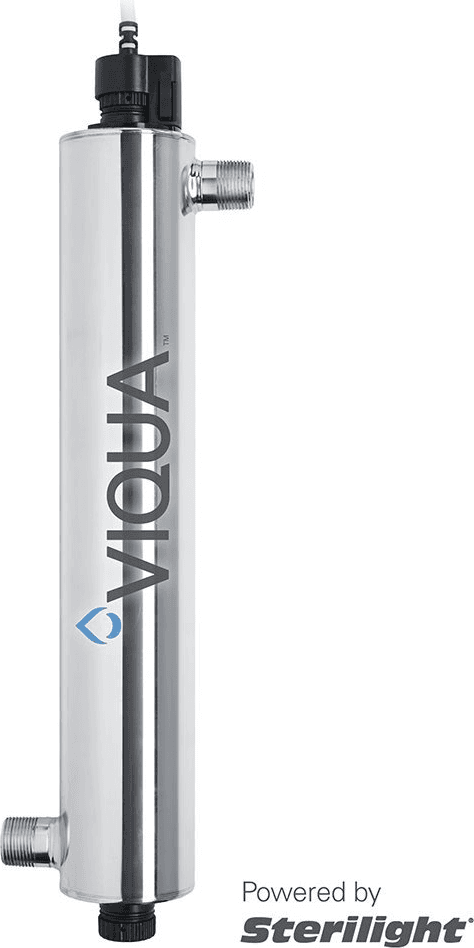
A UV system is a stainless chamber with a lamp inside a quartz sleeve. Water passes through the chamber, the ultraviolet light disrupts the DNA of bacteria, viruses and cysts, and they can no longer reproduce. No chlorine, no chemicals, no change in taste or smell, and it works continuously, 24/7, on every gallon the house uses. The unit we install is the Viqua VH410, a whole-house chamber sized for residential flow rates.
The reasons a well around DeWitt, Welton or Maquoketa tests positive are ordinary ones: an old or shallow well with a casing that lets surface water in after a wet spring, a pit well, a cap that no longer seals, or a septic system nearby. A one-time chlorine shock clears the current contamination and does nothing about the next one, which is why a well that has tested positive once is a candidate for UV. Maintenance is an annual lamp replacement and a cleaning of the sleeve, done in the same visit.
UV has one hard requirement: clear water. Iron, sediment and hardness scale coat the sleeve and shade the lamp, so the chamber is plumbed last, after the filter and the softener. On a well with iron that means the iron filter or ozone system goes in first, and the free test tells us whether it is needed.
Chemical feed: peroxide or chlorine for the heaviest wells
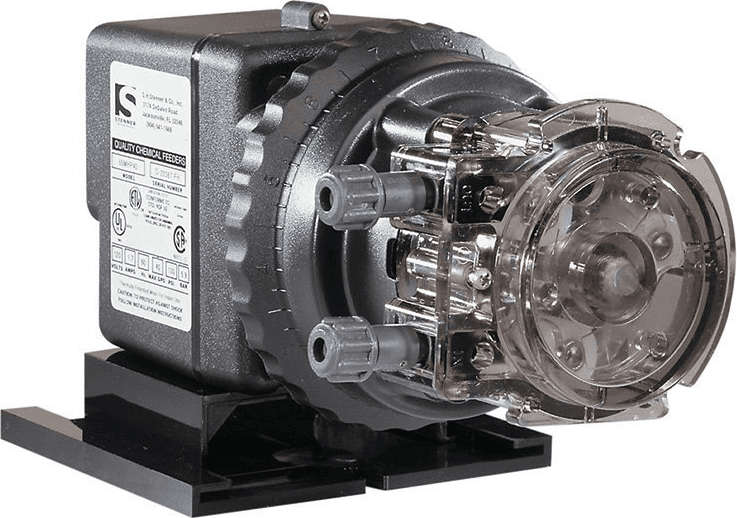
Most sulfur and iron problems in Silurian dolomite wells are handled by an iron filter or, where iron bacteria and heavy sulfur show up together, an ozone filter. A few wells carry more than either can oxidize on its own: hydrogen sulfide you can smell from the driveway, iron many times the staining threshold, or both. For those, a Stenner 45MHP series metering pump injects a small, steady dose of hydrogen peroxide or chlorine into the water line as the pump runs. The oxidizer converts dissolved sulfur, iron and manganese into particles inside a contact tank, and a filter behind the tank traps them and backwashes them to the drain.
Chlorine feed has a second use. Because it disinfects as it oxidizes, a chlorine injection system followed by a carbon filter to remove the residual is a way to treat a well that has both bacteria and heavy iron with one piece of equipment. Peroxide is the choice when the goal is oxidation without a chlorine residual. Which one, and at what dose, comes from the test numbers and the flow of the house, and the dose is checked and adjusted at service visits. The solution tank needs refilling on a schedule we set with you.
How these systems get sized and installed
Both systems start with the free water test and, for a bacteria question, a lab sample, which is part of our free testing and consultation on wells. The results decide the whole stack: sediment filter, iron or ozone filter, softener, and then UV at the end or a feed pump and contact tank at the front. We install the UV chamber after the last filter with a bypass and a wired power supply, or the feed pump with its solution tank, injection point and contact tank ahead of the filter, and we commission the system with the water running and a test at the tap.
Worth knowing
Installed equipment is backed by a 24/7 phone line, and we are on site within 2 hours for an emergency. Service covers any brand of UV or feed system, lamps included. To find out whether your well needs disinfection, chemical feed, or just a filter, request a free estimate or call (563) 221-9009.